As an Amazon Associate, we earn from qualifying purchases. This doesn’t change our recommendations or the price you pay.
The best smoke detector is one that’s installed in the right places, powered reliably and still working ten years from now. That sounds simple, but the shelf mixes battery alarms you’ll feed every year, sealed 10-year units you never open, hardwired alarms with backup power, and app-connected models that ping your phone when you’re away.
We compared seven alarms sold by Amazon.com or the brand’s own store: two Kidde hardwired and sealed-battery models, a best-selling First Alert battery alarm, a four-pack of hardwired photoelectric SITERWELL units, a Kidde smart alarm that works with Ring, a First Alert smart smoke and CO combo, and a Heiman wireless six-pack with a gateway.
For each pick, we quote the UL 217 wording exactly as the listing states it, note whether the listing names its sensor type, and flag empty warranty or weight fields. Placement, testing and replacement advice comes from the NFPA and the U.S. Fire Administration, not from the boxes.
Our Top Smoke Detector Picks at a Glance
| Product | Key features | Price | Action |
|---|---|---|---|
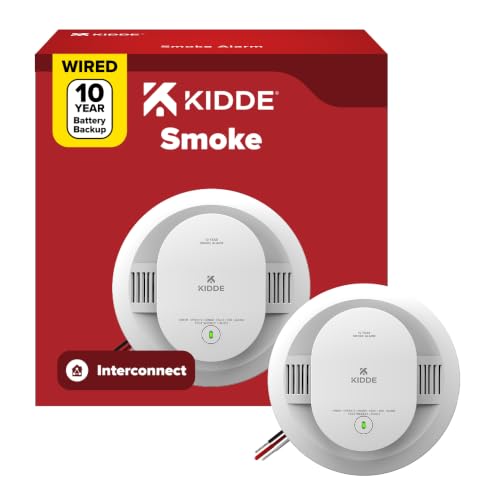 Kidde 20SA10 Hardwired Smoke AlarmBest Overall · Hardwired 120V AC, 10-year battery backupBest for: Replacing hardwired alarms in an existing home |
|
$ | Buy Now →Check current price |
 Kidde 20SD10 10-Year Battery Smoke AlarmBest 10-Year Battery Smoke Detector · Sealed 10-year battery, standaloneBest for: Rooms without alarm wiring |
|
$ | Buy Now →Check current price |
 First Alert Battery Smoke AlarmBest Budget Battery Alarm · Battery-operated, replaceable batteryBest for: Low-cost coverage in extra rooms |
|
$ | Buy Now →Check current price |
 SITERWELL GS562A Hardwired Photoelectric 4-PackBest Hardwired Photoelectric Value Pack · Hardwired 120V AC, 9V backup, photoelectricBest for: Outfitting a whole wired house at once |
|
$$ | Buy Now →Check current price |
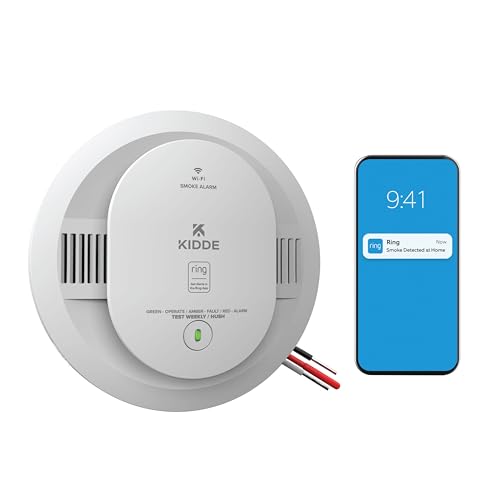 Kidde Smart Smoke Detector with Ring (RGSAR-RW)Best Smart Upgrade for Hardwired Homes · Hardwired with AA backup, Wi-Fi via Ring appBest for: Phone alerts without replacing every alarm |
|
$$ | Buy Now →Check current price |
 First Alert SC5 Battery Smart Smoke & CO AlarmBest Smart Smoke and CO Combo · Battery-powered smart combo, smoke and COBest for: One app-connected alarm for smoke and carbon monoxide |
|
$$$ | Buy Now →Check current price |
 Heiman S1-R Wireless Smoke Detector 6-Pack + GatewayBest Wireless Interconnected Kit · Wireless interconnect, 10-year battery, photoelectricBest for: Interconnecting a whole house without new wiring |
|
$$$$ | Buy Now →Check current price |
Price key: $ under $50 · $$ $50–$100 · $$$ $100–$175 · $$$$ $175+. Prices change often; check Amazon for today’s price.
1. Kidde 20SA10 Hardwired Smoke Alarm: Best Overall
Kidde’s 20SA10 is a hardwired smoke alarm built for homes that already have alarm wiring in the ceiling. It runs on 120V household power, and a built-in 10-year battery takes over if the power goes out, so there’s no backup battery to swap each year. When it detects smoke, it sounds an 85-decibel alarm and lights a red LED.
Kidde says the alarm “detects smoke over 25% faster,” a claim tied to a footnote on the listing, and that its sensing technology “helps distinguish between real smoke and everyday cooking or steam.” The listing says it was “Rigorously tested to meet UL 217 10th Edition and FCC standards.” It doesn’t say whether the sensor is photoelectric, ionization or both, so check the packaging or manual if sensor type matters to you.
Interconnection is the other big feature. The listing says it “Connects with other Kidde alarms so when one detects danger, all connected units sound together.” In a home with interconnect wiring already in place, that means a fire in the basement sets off the alarm outside the bedrooms too. The warranty field reads “10-Year Limited Warranty,” and the listing says it runs from the date of purchase.
It suits homeowners replacing hardwired alarms that are near or past their ten-year mark, and landlords who want to stop chasing backup-battery chirps between tenants. If your home has no alarm wiring, a sealed-battery model is the easier choice, because hardwired alarms should go in with a qualified electrician.
Why we like it
- No yearly backup battery swaps
- Interconnects with other Kidde alarms
- Ten-year warranty field
Watch out for
The listing never names the sensor type, and the interconnect promise covers Kidde alarms, so plan on matching brands across the house.
Key Specifications
| Type | Hardwired 120V AC, 10-year battery backup |
|---|---|
| Power | 120V AC with built-in 10-year battery backup |
| Alarm | 85 dB with red LED |
| Standard (listing) | Tested to meet UL 217 10th Edition and FCC |
| Listed size / weight | 1.88 x 5 x 5 in / 0.59 lb |
| Size | 1.88 x 5 x 5 in |
| Listed weight | 0.59 pounds |
| Warranty | 10-Year Limited Warranty |
| Model | 20SA10 |
| Seller | Amazon.com |
| Best Sellers Rank | #1,362 overall; #11 in Smoke Detectors & Fire Alarms (Oct 2026) |
Why We Recommend It
Hardwired power plus a sealed backup is the combination that earns the 20SA10 top billing. The listing says it “Operates on 120V AC with a built-in 10-year battery,” so the yearly backup-battery swap that the SITERWELL and Kidde Ring models still need simply goes away.
Interconnect is spelled out: it “Connects with other Kidde alarms so when one detects danger, all connected units sound together.” On standards, Kidde says it was “Rigorously tested to meet UL 217 10th Edition and FCC standards.” That’s tested-to-meet wording, compared with the SITERWELL’s “UL217 10th Listed” and the Heiman’s “Certified to UL 217 10th Edition.” The sensor type isn’t named.
Amazon.com sells it, and the warranty field reads “10-Year Limited Warranty.” It ranks #11 in Smoke Detectors & Fire Alarms and #1,362 overall, behind the First Alert battery alarm and its own 20SD10 sibling. The listed size is 1.88 x 5 x 5 inches at 0.59 pounds, close to the other Kidde picks.
Owners of wired homes replacing ten-year-old alarms should start here. Renters and homes without alarm circuits should look at the 20SD10 or the Heiman kit instead.
Pros
- Hardwired with a built-in 10-year battery backup
- Interconnects with other Kidde alarms, per the listing
- Listing: “tested to meet UL 217 10th Edition and FCC standards”
- Warranty field: “10-Year Limited Warranty”
- Sold by Amazon.com
Cons
- Listing doesn’t name the sensor type (photoelectric or ionization)
- Needs existing wiring or an electrician
- Interconnect is described for Kidde alarms only
- Rank #1,362 overall trails the battery picks
Best for: A homeowner swapping out aging hardwired alarms who wants a 10-year backup battery instead of yearly battery changes.
2. Kidde 20SD10 10-Year Battery Smoke Alarm: Best 10-Year Battery Smoke Detector
The Kidde 20SD10 is the battery-only sibling of the hardwired 20SA10. A built-in 10-year battery powers it continuously, so you mount the base to a ceiling or wall, attach the alarm and leave it. There’s no battery door to open and no low-battery chirp to chase at 2 a.m., which is the main reason people pick a sealed unit.
When smoke is present, it sounds an 85-decibel alarm with a red LED. Kidde makes the same speed claim as on its hardwired model, “detects smoke over 25% faster,” and says its sensing technology “helps distinguish between real smoke and everyday cooking or steam.” The listing says it was “Rigorously tested to meet UL 217 10th Edition and FCC standards.” Like the 20SA10, it doesn’t say which sensor type it uses.
Day to day, the only job is pressing the test button once a month. When the battery reaches the end of its life, the whole alarm is replaced, which lines up with the fire service advice to replace smoke alarms ten years after manufacture. The warranty field reads “10-Year Limited Warranty,” and the listing says it starts from the date of purchase.
It suits renters who can’t touch wiring, older homes with no alarm circuits, and anyone filling gaps such as a basement, finished attic or new bedroom. Because the listing describes no interconnect feature, each alarm sounds on its own.
Why we like it
- Install-and-forget sealed battery
- No wiring or electrician
- Strong category rank
Watch out for
Each alarm stands alone, so a fire at the far end of a large house may not be heard in a closed bedroom.
Key Specifications
| Type | Sealed 10-year battery, standalone |
|---|---|
| Power | Built-in 10-year battery |
| Alarm | 85 dB with red LED |
| Standard (listing) | Tested to meet UL 217 10th Edition and FCC |
| Listed size / weight | 2 x 5 x 5 in / 0.6 lb |
| Size | 2 x 5 x 5 in |
| Listed weight | 0.6 pounds |
| Warranty | 10-Year Limited Warranty |
| Model | 20SD10 |
| Seller | Amazon.com |
| Best Sellers Rank | #932 overall; #7 in Smoke Detectors & Fire Alarms (Oct 2026) |
Why We Recommend It
Ten years without a battery change is the whole pitch. Kidde says the “Built-in 10-year battery powers the alarm continuously” and “eliminates low-battery chirps.” Among the battery-only picks, only this and the Heiman S1-R kit list a sealed 10-year cell; the First Alert needs fresh batteries.
Detection claims mirror the 20SA10: “detects smoke over 25% faster*” and “helps distinguish between real smoke and everyday cooking or steam.” The listing says it was “Rigorously tested to meet UL 217 10th Edition and FCC standards.” What it doesn’t mention is interconnect, so unlike the 20SA10, SITERWELL, Heiman and SC5, each unit sounds alone.
Amazon.com is the seller, and the warranty field reads “10-Year Limited Warranty.” Its rank, #7 in Smoke Detectors & Fire Alarms and #932 overall, is second only to the First Alert among the smoke-only picks by category. The specs list 2 x 5 x 5 inches and 0.6 pounds.
Renters, older homes without wiring and anyone tired of chirps will appreciate it. Large or multi-story homes that need every alarm to sound together should weigh the Heiman wireless kit.
Pros
- Built-in 10-year battery, no battery changes
- Listing: “tested to meet UL 217 10th Edition and FCC standards”
- Warranty field: “10-Year Limited Warranty”
- #7 in Smoke Detectors & Fire Alarms, #932 overall
- No wiring needed
Cons
- No interconnect feature on the listing
- Sensor type not named on the listing
- Whole unit is replaced when the battery ends
- No app or smart alerts
Best for: A renter or homeowner adding alarms to bedrooms and hallways that have no wiring, who never wants to buy a smoke alarm battery again.
3. First Alert Battery Smoke Alarm: Best Budget Battery Alarm
First Alert’s Battery Smoke Alarm is the simplest pick here: a standalone alarm that runs on a replaceable battery and mounts anywhere without wiring. It’s also the most popular, ranking first in Amazon’s Smoke Detectors & Fire Alarms category at the time we checked.
First Alert says its “Precision Detection advanced sensing technology complies with new industry standards to reduce cooking nuisance alarms and provides early warning in the event of a home fire emergency.” The listing doesn’t name the standard, the sensor type or the battery size, so those details are worth confirming on the package before you buy several.
Living with it is straightforward. A front-access battery compartment lets you swap batteries without taking the alarm off its base, and a test/silence button handles both the monthly test and quieting a nuisance alarm. An end-of-life warning tells you when the alarm itself needs replacing. Battery alarms like this need fresh batteries at least once a year, according to the U.S. Fire Administration, and the whole alarm should be replaced at ten years.
It suits households covering a lot of rooms on a tight budget, renters who need to add alarms fast, and anyone who already has a routine for changing batteries each year. The specs list it at 5.4 by 5.4 by 1.9 inches and 0.7 pounds.
Why we like it
- Lowest-cost way to cover more rooms
- Easy front battery access
- End-of-life warning
Watch out for
Expect a yearly battery change, and check the package for the UL listing and sensor type the listing leaves out.
Key Specifications
| Type | Battery-operated, replaceable battery |
|---|---|
| Power | Replaceable battery (type not stated) |
| Controls | Test/silence button |
| Alerts | End-of-life warning |
| Listed size / weight | 5.4 x 5.4 x 1.9 in / 0.7 lb |
| Size | 5.4 x 5.4 x 1.9 in |
| Listed weight | 0.7 pounds |
| Warranty | Not stated in listing |
| Model | SMI100; made by Resideo |
| Seller | Amazon.com |
| Best Sellers Rank | #63 overall; #1 in Smoke Detectors & Fire Alarms (Oct 2026) |
Why We Recommend It
Popularity leads the case: this First Alert alarm is #1 in Smoke Detectors & Fire Alarms and #63 overall, the best rank on this page by a wide margin. Amazon.com sells it.
Features are basic but sensible. First Alert says its “Precision Detection advanced sensing technology complies with new industry standards to reduce cooking nuisance alarms.” A “Front access battery compartment makes for easy battery replacements,” and an “End-of-life warning lets you know when it’s time to replace the alarm.” Neither the SITERWELL nor the Kidde 20SD10 lists a front battery door, but the 20SD10 never needs one.
The listing is thin in places. The warranty field is empty, no UL standard is named, and neither the battery type nor the sensor type is stated. The model field reads “SMI100,” which is also the name First Alert uses for its hardwired line, so confirm you’re getting the battery version. The specs give 5.4 x 5.4 x 1.9 inches and 0.7 pounds.
Tight budgets and big room counts favor it. Shoppers who want a stated UL 217 listing or no battery changes should pick the Kidde 20SD10 instead.
Pros
- Best rank here: #1 in Smoke Detectors & Fire Alarms, #63 overall
- Precision Detection aimed at cooking nuisance alarms
- Front-access battery compartment
- End-of-life warning
- Sold by Amazon.com
Cons
- Warranty field empty
- Listing names no UL standard
- Battery type and sensor type not stated
- Model field reads “SMI100,” the name of First Alert’s hardwired line
Best for: A budget-minded household that needs to cover every bedroom quickly and doesn’t mind changing batteries.
4. SITERWELL GS562A Hardwired Photoelectric 4-Pack: Best Hardwired Photoelectric Value Pack
SITERWELL’s GS562A four-pack is a set of hardwired photoelectric smoke alarms meant to go up together. Each runs on 120V AC with a replaceable 9V backup battery that keeps it working during outages, and the wiring interconnect links up to 12 alarms so that when one triggers, all of them sound.
SITERWELL names its sensor outright, calling it a “high-sensitivity photoelectric smoke sensor” that “effectively identifies slow smoldering fires,” and claims it “responds in 1 second” with “5x higher accuracy than traditional detectors.” Those speed and accuracy figures are the brand’s own. The listing heading reads “UL217 10th Listed,” and the text says it “complies with UL 217 10th Edition safety standards.”
Day to day, a multifunction test/silence button runs the monthly self-check and can mute a low-battery chirp for 10 hours while you find a fresh 9V. The listing says the alarm also signals faults with LED flashes and chirps. Each unit sounds at 85 decibels with a flashing red LED, and the housing is described as flame-retardant ABS+PC.
It suits homeowners and landlords replacing a full set of wired alarms, especially near kitchens and bathrooms, where the NFPA says photoelectric alarms are the best type to reduce nuisance alarms. Plan on an electrician if you’re adding new wiring rather than swapping like-for-like.
Why we like it
- Named photoelectric sensor
- Interconnects up to 12 alarms
- Four alarms per box
Watch out for
The 9V backup needs a yearly change, and the listing doesn’t say whether it interconnects with other brands, so keep the whole house on SITERWELL.
Key Specifications
| Type | Hardwired 120V AC, 9V backup, photoelectric |
|---|---|
| Power | 120V AC with replaceable 9V backup |
| Sensor | Photoelectric |
| Interconnect | Hardwired, up to 12 alarms |
| Standard (listing) | “UL217 10th Listed” |
| Size | 7.4 x 6.3 x 6.3 in |
| Listed weight | Not stated in listing |
| Warranty | Not stated in listing |
| Model | GS562A-EAN; made by SITERWELL ELECTRONICS CO.,LIMITED |
| Seller | Amazon.com |
| Best Sellers Rank | #51,586 overall; #74 in Smoke Detectors & Fire Alarms (Oct 2026) |
Why We Recommend It
Sensor transparency sets the SITERWELL apart. Its listing names a “high-sensitivity photoelectric smoke sensor” that “effectively identifies slow smoldering fires,” while both Kidde alarms and both First Alert alarms leave sensor type unstated.
Wiring and standards are clear too. It “works with 120V AC hardwired power and comes with a replaceable 9V backup battery,” and it “connects up to 12 smoke detectors.” The heading reads “UL217 10th Listed,” and the text says it “complies with UL 217 10th Edition.” A test/silence button gives a “10-hour non-disturb mute mode” for low-battery chirps. The “5x higher accuracy” line is SITERWELL’s own comparison.
Amazon.com sells it. Sales are the weakest here at #51,586 overall and #74 in Smoke Detectors & Fire Alarms. The warranty and weight fields are empty, and the 7.4 x 6.3 x 6.3-inch size looks like the four-pack box. Unlike the Kidde 20SA10, its backup is a 9V you’ll replace yearly.
Landlords and owners rewiring several rooms get four photoelectric alarms in one order. Anyone who wants to avoid yearly battery swaps should pay a little more per alarm for the Kidde 20SA10.
Pros
- Photoelectric sensor named on the listing
- Listing heading: “UL217 10th Listed”
- Interconnects up to 12 alarms
- Four alarms in one box
- Sold by Amazon.com
Cons
- Weakest rank here: #51,586 overall
- Replaceable 9V backup needs yearly changes
- Warranty and weight fields empty
- “5x higher accuracy” is SITERWELL’s own claim
Best for: A homeowner or landlord rewiring several rooms at once who wants named photoelectric sensing at a lower cost per alarm.
5. Kidde Smart Smoke Detector with Ring (RGSAR-RW): Best Smart Upgrade for Hardwired Homes
Kidde’s RGSAR-RW is a hardwired smoke alarm with Wi-Fi smarts handled through the Ring app. It replaces a standard hardwired alarm, runs on household power with AA battery backup, and sends smoke and low-battery warnings to your phone whether you’re home or away. Kidde says those app notifications need no subscription.
The listing makes an interesting claim for wired homes: “Get mobile alerts for every hardwired alarm in your home by adding just one Kidde smart detector,” with a note to check the user guide. In other words, the smart alarm is meant to report on the interconnected alarms already in your ceiling. Kidde also claims “Over 25% faster smoke detection,” based on its internal testing against a leading competitor, and “Enhanced sensing technology” that reduces cooking false alarms compared with older Kidde alarms.
Day to day, it behaves like a normal alarm with an app layer on top. Alerts can also come through Alexa-enabled devices, and Ring offers optional 24/7 smoke monitoring as a paid subscription sold separately. The listing says it is “Comprehensively tested & certified to meet requirements of UL 217 and FCC standards.” The warranty field reads “10-year Limited Warranty.”
It suits homeowners who already use Ring, travel often, or own a rental or second home and want to know about an alarm the moment it sounds.
Why we like it
- Phone alerts with no required subscription
- One unit can report other wired alarms, per Kidde
- Works with Alexa
Watch out for
It still needs hardwiring and AA backups, and round-the-clock professional monitoring costs extra.
Key Specifications
| Type | Hardwired with AA backup, Wi-Fi via Ring app |
|---|---|
| Power | Hardwired with AA battery backup |
| App | Ring app; Alexa notifications |
| Standard (listing) | Tested & certified to meet UL 217 and FCC |
| Listed size / weight | 2 x 5 x 5 in / 0.4 lb |
| Size | 2 x 5 x 5 in |
| Listed weight | 0.4 pounds |
| Warranty | 10-year Limited Warranty |
| Model | RGSAR-RW |
| Seller | Amazon.com |
| Best Sellers Rank | #620 overall; #27 in Smoke Detectors & Fire Alarms (Oct 2026) |
Why We Recommend It
Phone alerts without a subscription are the draw. Kidde says the Ring app gives “smoke or low battery warnings (no subscription required),” and that adding “just one Kidde smart detector” brings mobile alerts for every hardwired alarm in the home, per its user guide.
It also reaches Alexa: “Get notifications from Alexa-enabled devices.” Ring’s 24/7 smoke monitoring is optional and sold separately. On standards, it’s “Comprehensively tested & certified to meet requirements of UL 217 and FCC standards,” stronger wording than the 20SA10’s tested-to-meet line. The speed claim, “Over 25% faster,” is based on Kidde’s internal testing.
Amazon.com sells it, and the warranty field reads “10-year Limited Warranty.” At #620 overall it out-ranks every pick except the First Alert battery alarm, though it’s #27 within Smoke Detectors & Fire Alarms. It weighs a listed 0.4 pounds at 2 x 5 x 5 inches. Backup is AA batteries, not a sealed cell, and the sensor type isn’t named.
Ring households and owners of rentals or second homes are the natural buyers. If you want smoke and CO in one smart unit, the First Alert SC5 fits better.
Pros
- Ring app alerts with no subscription required
- Listing: “tested & certified to meet requirements of UL 217”
- Alexa notifications
- Warranty field: “10-year Limited Warranty”
- #620 overall, sold by Amazon.com
Cons
- Optional 24/7 monitoring is a paid Ring add-on
- AA backup batteries need replacing
- Sensor type not named
- Hardwiring required
Best for: A homeowner with existing hardwired alarms who wants phone alerts when away, without replacing every alarm in the house.
6. First Alert SC5 Battery Smart Smoke & CO Alarm: Best Smart Smoke and CO Combo
First Alert’s SC5 battery model is a smart combination alarm that watches for both smoke and carbon monoxide. It runs on batteries, so it mounts without wiring, and it connects to the First Alert app to send alerts to your phone when it detects smoke or CO.
The standout feature is voice. First Alert describes “Voice alerts with Heads-Up warning” that tell you the type and location of the danger, which helps when you wake to an alarm and need to know whether it’s a fire or a CO problem, and where. The listing also says the alarm notifies you when batteries are low, aiming to avoid late-night chirps, and that it uses “Precision Detection Technology to help reduce nuisance alarms.”
Interconnection is wireless: when one alarm sounds, all compatible alarms in the home sound. The listing also says it is “Compatible with Google’s Nest Protect Alarm,” which matters to anyone with an existing Nest Protect setup. One quirk worth knowing: First Alert notes that the date printed on the alarm is the manufacture date, which is the date to count ten years from for replacement.
It suits households with a furnace, gas range, fireplace or attached garage that want smoke and CO coverage in one device, plus app alerts. Our carbon monoxide detector guide covers dedicated CO alarms, including plug-in models with digital readouts.
Why we like it
- Voice alerts name danger and location
- Smoke and CO in one alarm
- Works alongside Nest Protect, per the listing
Watch out for
The listing names no UL standard and no battery type, so check the package details before you buy.
Key Specifications
| Type | Battery-powered smart combo, smoke and CO |
|---|---|
| Detects | Smoke and carbon monoxide |
| Power | Battery (type not stated) |
| Smart features | First Alert app, voice alerts, interconnect |
| Listed size / weight | 5.75 x 1.6 x 5.75 in / 1 lb |
| Size | 5.75 x 1.6 x 5.75 in |
| Listed weight | 1 pounds |
| Warranty | Not stated in listing |
| Model | SMCO600NV |
| Seller | Amazon.com |
| Best Sellers Rank | #2,539 overall; #17 in Combination Smoke & Carbon Monoxide Detectors (Oct 2026) |
Why We Recommend It
Two hazards, one ceiling spot: the SC5 is the only pick here that detects both smoke and carbon monoxide. It “Sends alerts to your phone if smoke and CO are detected through the First Alert app.”
Voice sets it apart: “Voice alerts with Heads-Up warning tells you the type and location of danger in your home.” No other pick here describes spoken, location-specific alerts. It interconnects with compatible alarms and is “Compatible with Google’s Nest Protect Alarm.” It “Notifies when the batteries are low,” and uses “Precision Detection Technology to help reduce nuisance alarms.”
Amazon.com sells it, and it ranks #17 in Combination Smoke & Carbon Monoxide Detectors and #2,539 overall. The warranty field is empty, no UL standard is named, and the battery type isn’t stated. At a listed 1 pound and 5.75 x 1.6 x 5.75 inches, it’s the heaviest single alarm here. Per alarm, it costs more than any other pick.
Gas-heated homes and Nest Protect owners will get the most from it. Shoppers who want a stated UL listing at a lower price should pair a Kidde smoke alarm with a separate CO alarm from our CO guide.
Pros
- Detects smoke and carbon monoxide in one unit
- Voice alerts name the danger and its location
- Phone alerts through the First Alert app
- Listing says it’s compatible with Google’s Nest Protect
- Sold by Amazon.com
Cons
- Priciest single alarm here
- Warranty field empty
- Listing names no UL standard
- Heaviest listed weight here: 1 lb
Best for: A household with gas appliances or an attached garage that wants smoke and CO alerts on the phone from a single wire-free alarm.
7. Heiman S1-R Wireless Smoke Detector 6-Pack + Gateway: Best Wireless Interconnected Kit
Heiman’s S1-R kit bundles six wireless smoke alarms with a smart gateway. Each alarm runs on a 10-year CR123A lithium battery, so there’s no wiring and no yearly battery change. Out of the box, the alarms interconnect wirelessly with no Wi-Fi needed: when one detects smoke, all linked units sound. Add the included gateway to your home network and the system also sends phone or email alerts through the Heiman Home app.
Sensing is dual-beam photoelectric, which Heiman says tracks slow-smoldering fires while filtering out cooking vapors and dust. The listing says the alarms are “Certified to UL 217 10th Edition, CSFM, and FCC.” Each alarm sounds at 85 decibels with flashing LEDs and gives low-battery chirps, fault alerts and life-end warnings. Heiman calls the design a Red Dot award winner and lists each alarm at about 70 millimeters across and 37 millimeters tall.
Setup takes a little more thought than a single alarm. The gateway joins a 2.4GHz Wi-Fi network only, not 5GHz. Heiman says you can group up to 24 wirelessly linked alarms and connect other Heiman sensors to the same gateway, and that the gateway works with Home Assistant, IFTTT, Google Home and SmartThings when the right hub or ecosystem setup is in place. Alarms mount with magnetic pads or the included hardware.
It suits multi-story homes and rentals where running interconnect wire would mean opening walls, and owners who want remote alerts from every room.
Why we like it
- Whole-house interconnect with no wiring
- Named photoelectric sensor and UL 217 certification
- Phone alerts via the gateway
Watch out for
Check that your router offers a 2.4GHz band before buying, and note this kit ships from Heiman’s own store rather than Amazon.com.
Key Specifications
| Type | Wireless interconnect, 10-year battery, photoelectric |
|---|---|
| Kit | 6 smoke alarms + WS3GW-R gateway |
| Power | 10-year CR123A lithium battery |
| Sensor | Dual-beam photoelectric |
| Alarm size / weight | 2.75 x 2.75 x 1.45 in / 0.22 lb |
| Size | 2.75 x 2.75 x 1.45 in |
| Listed weight | 0.22 pounds |
| Warranty | 10-Year Limited Warranty (replacement for non-artificial damage) |
| Model | S1-R; made by Shenzhen Heiman Technology Co., Ltd. |
| Seller | Heiman US Official |
| Best Sellers Rank | #44,530 overall; #68 in Smoke Detectors & Fire Alarms (Oct 2026) |
Why We Recommend It
Whole-house interconnect without wiring is Heiman’s case. The kit pairs six alarms with a gateway, and “Without Wi-Fi, smoke alarms can wirelessly interconnect locally: when one detects smoke, all linked units trigger instantly.”
Certification is stated plainly: “Certified to UL 217 10th Edition, CSFM, and FCC.” Sensing is “dual-beam photoelectric,” making it one of two picks, with the SITERWELL, that name a sensor type. Power is a “10-year CR123A lithium battery,” and the gateway adds phone or email alerts on “a 2.4GHz Wi-Fi network (not compatible with 5GHz).”
Heiman US Official, the brand’s own store, is the seller. The warranty field reads “10-Year Limited Warranty (replacement for non-artificial damage).” Sales rank is #44,530 overall and #68 in Smoke Detectors & Fire Alarms. Each alarm is listed at 2.75 x 2.75 x 1.45 inches and 0.22 pounds, the smallest and lightest here. It’s also the most expensive purchase, though it covers six rooms.
Multi-story homes and rentals without interconnect wiring are the best fit. Single-room buyers or anyone with a 5GHz-only router should choose the Kidde 20SD10.
Pros
- Six alarms plus a smart gateway
- Listing: “Certified to UL 217 10th Edition, CSFM, and FCC”
- Dual-beam photoelectric sensor
- Interconnects wirelessly without Wi-Fi
- Warranty field: 10-year limited, replacement for non-artificial damage
Cons
- Most expensive pick here
- Gateway needs 2.4GHz Wi-Fi (no 5GHz)
- Rank #44,530 overall
- Sold by Heiman US Official, not Amazon.com
Best for: A homeowner or landlord who wants every alarm to sound together, plus phone alerts, in a house with no interconnect wiring.
How We Chose the Best Smoke Detectors
We kept only alarms that were in stock and sold by Amazon.com or the brand’s own store, then compared what each listing actually says:
- Standard wording: whether the listing says it is “listed,” “certified” or “tested to meet” UL 217, or names no standard at all.
- Sensor type: photoelectric, ionization or dual-sensor, and whether the listing names it.
- Power: replaceable battery, sealed 10-year battery, or hardwired with battery backup.
- Interconnection: wired, wireless or app-based, and which alarms each one links with.
- Warranty and popularity: the warranty field and Amazon sales rank, with empty fields flagged.

Smoke Detector Buying Guide
Best Photoelectric Smoke Detector vs. Ionization and Dual-Sensor
The NFPA’s smoke alarm page explains that ionization alarms are more responsive to flaming fires and photoelectric alarms are more responsive to smoldering fires, and that photoelectric alarms are the best type to install near kitchens and bathrooms to reduce nuisance alarms. The U.S. Fire Administration recommends that every home have both ionization and photoelectric alarms, or dual-sensor alarms that contain both. Among our picks, only the SITERWELL and Heiman listings name a sensor type (photoelectric). The Kidde and First Alert listings describe “advanced sensing technology” without saying which sensor is inside, so check the package or manual.
Best 10 Year Smoke Detector: Sealed Battery vs. Replaceable
The USFA notes that battery alarms run on either a disposable battery or a nonreplaceable 10-year lithium battery. A sealed unit like the Kidde 20SD10 or the Heiman S1-R removes the yearly battery change, and you replace the whole alarm when it reaches end of life. A replaceable-battery alarm like the First Alert costs less up front but needs new batteries at least once a year.

Best Hardwired Smoke Detector With Battery Backup
Hardwired alarms run on household power and keep working on battery during an outage. The USFA says hardwired alarms usually have a backup battery that needs replacing once a year, and that only qualified electricians should install hardwired alarms. The Kidde 20SA10 is the exception here, with a built-in 10-year backup; the SITERWELL uses a replaceable 9V; the Kidde Ring model uses AA backups.
Best Smart Smoke Detector and Interconnection
Both the NFPA and USFA recommend interconnected alarms, so that when one sounds, they all sound. You can get there three ways: interconnect wiring (Kidde 20SA10, SITERWELL), wireless links between alarms (Heiman, First Alert SC5), or a smart alarm that reports to your phone (Kidde with Ring, First Alert SC5, Heiman with its gateway). Interconnect usually works only within a brand or a list of compatible models, so stick to one system per house.
Best Smoke and Carbon Monoxide Detector Combos
A combination alarm saves a ceiling spot and a second device. The First Alert SC5 is our combo pick here. If your home has fuel-burning appliances, a fireplace or an attached garage, read our best carbon monoxide detector guide too, because CO alarm placement and features such as digital readouts differ from smoke alarms.

Hush Buttons and Cooking Nuisance Alarms
Every pick here has a test or test/silence button. The USFA warns never to pull the battery when an alarm goes off during cooking or a steamy shower: open a window or door, press the hush button and wave a towel to clear the air. If false alarms keep happening, the NFPA advises keeping alarms at least 10 feet from the stove and suggests newer multi-criteria alarms labeled “helps reduce cooking nuisance alarms” when it’s time to replace older units.
Where to Install Smoke Alarms and How Often to Test Them
The NFPA’s safety tips call for smoke alarms in every sleeping room, outside each separate sleeping area and on every level of the home, including the basement. Mount them on the ceiling or high on a wall, and follow the manufacturer’s instructions for exact placement.
- Test monthly: press the test button once a month, per the NFPA.
- Replace at 10 years: the USFA says smoke alarms need replacing 10 years from the manufacture date.
- Know the sounds: the NFPA says a continued set of three loud beeps means smoke or fire: get out, call 9-1-1 and stay out. A single chirp every 30 or 60 seconds means a low battery, and chirping after a new battery means end of life.

Smoke Alarms, Fire Extinguishers and Your Homeowners Policy
Smoke alarms buy you time to get out; a small, properly rated extinguisher can help with a very small fire if you have a clear exit. Our best fire extinguisher guide covers ratings and where to keep them. Insurers may ask whether your home has working smoke alarms. Whether that affects your premium or coverage depends on your insurer and policy, so ask your agent rather than assuming a discount. For the basics, see our Ohio homeowners insurance guide and these insurance tips for first-time Ohio homeowners.

Frequently Asked Questions
What is the best smoke alarm for most homes?
For homes with existing alarm wiring, the Kidde 20SA10 is our top pick: it runs on household power, has a built-in 10-year backup battery and interconnects with other Kidde alarms. Homes without wiring can use its sealed-battery sibling, the Kidde 20SD10.
Is a photoelectric smoke detector better than ionization?
Each responds better to a different fire. The NFPA says ionization alarms respond more to flaming fires and photoelectric alarms more to smoldering fires, and that photoelectric is best near kitchens and bathrooms. The USFA recommends both types, or dual-sensor alarms.
Are 10-year smoke detectors worth it?
They remove yearly battery changes and low-battery chirps. You still test them monthly and replace the whole alarm at end of life. The USFA says all smoke alarms need replacing 10 years from the manufacture date, whatever their battery type.
What is the best smart smoke detector?
For homes with hardwired alarms, the Kidde Smart Smoke Detector with Ring sends app alerts with no required subscription. For a wire-free combo, the First Alert SC5 adds CO detection and voice alerts. The Heiman S1-R kit links six alarms wirelessly with a gateway.
Where should smoke detectors be placed?
The NFPA recommends one in every sleeping room, outside each separate sleeping area and on every level, including the basement. Mount them on the ceiling or high on a wall, and keep them at least 10 feet from the stove to cut nuisance alarms.
The Bottom Line
For most homes with alarm wiring, the Kidde 20SA10 is the best smoke detector to start with: hardwired, a 10-year backup battery and Kidde interconnect. The Kidde 20SD10 brings the same sealed-battery convenience to rooms without wiring, and the First Alert battery alarm covers extra rooms cheaply. The SITERWELL four-pack names a photoelectric sensor for wired homes, the Kidde with Ring adds phone alerts, the First Alert SC5 folds in CO detection, and the Heiman S1-R kit interconnects a whole house without new wire. Whatever you choose, cover every bedroom and level, test monthly and replace at ten years.
Updating your alarms and wondering how it affects your homeowners coverage? Call Jeff Smith’s State Farm office at (740) 354-7747 or request a free coverage review.
Keep reading
More kitchen gear guides
- Lid First, Blanket Second: The Best Fire Blanket for Kitchen Pan Fires, and Its Limits

- Mail-In Kit or Always-On Monitor? Best Radon Detector Options for the Lowest Lived-In Floor
- Best Fire Escape Ladder by Floor Height, Window Sill and Weight Rating

- Battery, Wired or No Monthly Fee: Which Best Video Doorbell Fits Your Front Door?

- What “Fireproof” Really Covers: The Best Fireproof Safe for Home Papers and Valuables

- Not Just a Power Strip: The Best Surge Protector for TVs, Desks and Wall Outlets

- Tip-Over Switch, Lab Mark, 3-Foot Rule: The Best Space Heater for Each Room
- Pump, Hose or Bucket? The Best Dehumidifier for Basement Damp and Musty Rooms

- Best Sump Pump Choices for a Dry Basement: Submersible, Pedestal and Battery Backup